
First article
The Commensal Table
A table is never only a table. In a busy family, it is where homework lands beside grocery bags, where a parent checks the calendar while stirring soup, where a child asks for another slice of toast, and where the quiet math of the week often happens. What do we have? Who needs to eat before practice? Can this be stretched into lunch tomorrow? At its best, a table is a place where people do not need to perform being fine. They can arrive hungry, tired, hopeful, distracted, or grateful, and still be met.
That is the spirit behind Durham Feast. This site is a blog about helping families and communities, especially through food, because food is one of the clearest ways care becomes real. Advice can be useful. Money can be necessary. Good intentions matter. But a pot of rice, a bag of apples, a freezer meal, a grocery ride, a pantry shelf, or a warm plate on a hard evening can change the shape of a day. Food does not solve every problem, but it gives people enough ground under their feet to face the next one.
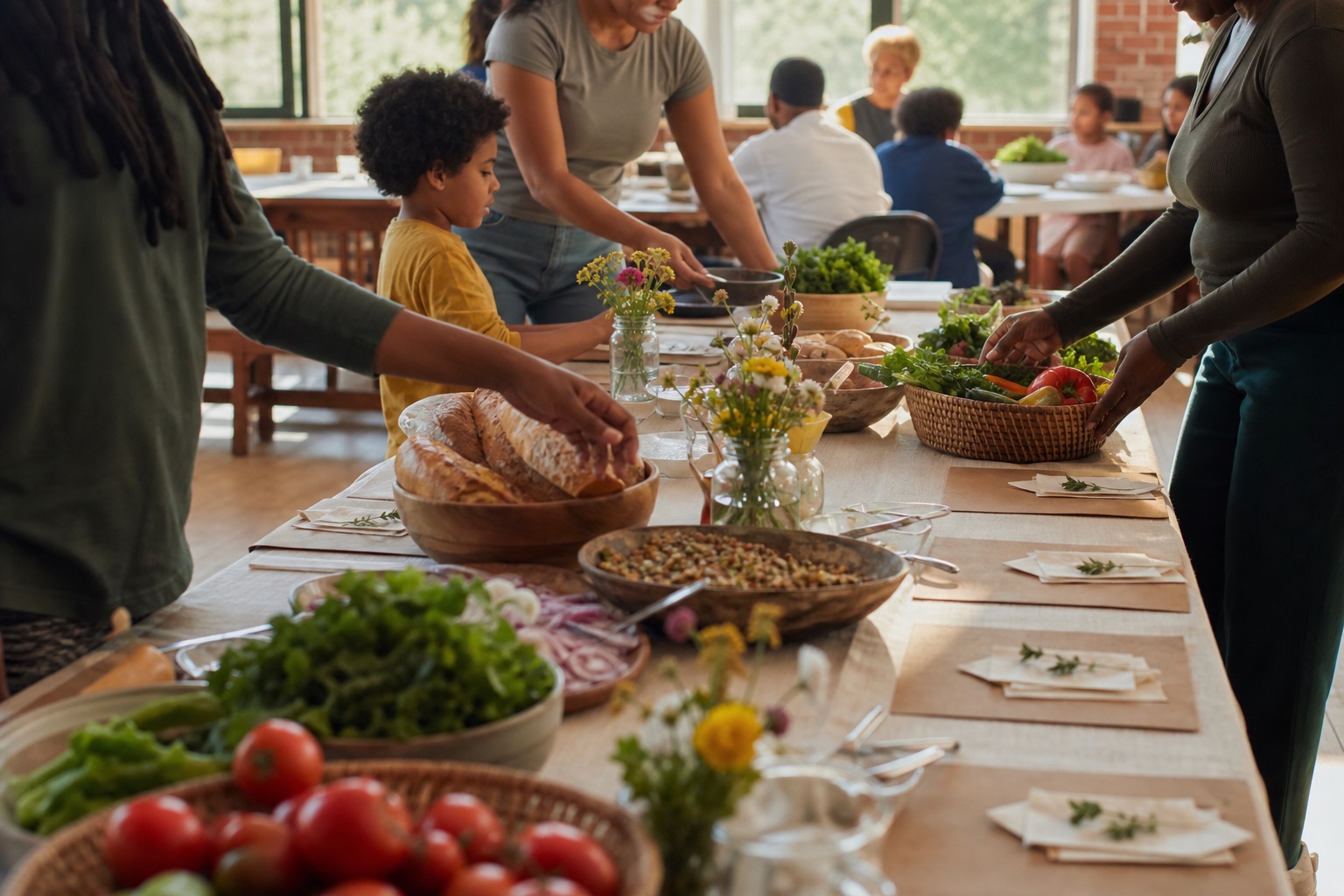
The word commensal means sharing a table. It has an old sound, but the idea is plain. People belong to one another in part because they eat near one another, make room for one another, and notice when someone has been missing. A commensal table does not have to be large or fancy. It can be a folding table in a church hallway, a picnic blanket at a park, a school cafeteria after a storm, a porch where someone leaves a bag of groceries, or a kitchen counter where a neighbor drops off soup and does not stay long enough to make the receiver feel watched.
Durham has many kinds of families and many kinds of need. Some households are dealing with a short paycheck, a medical bill, a lost job, a new baby, a move, a sick parent, or school breaks that make meals harder. Others are stable this month but remember when they were not. The best community help starts by refusing to sort people into givers and receivers as if those roles are permanent. Most of us are both. We bring what we can. We accept what we need. We trade recipes, childcare tips, bus routes, coupons, garden extras, and the names of people who know how to fix things.
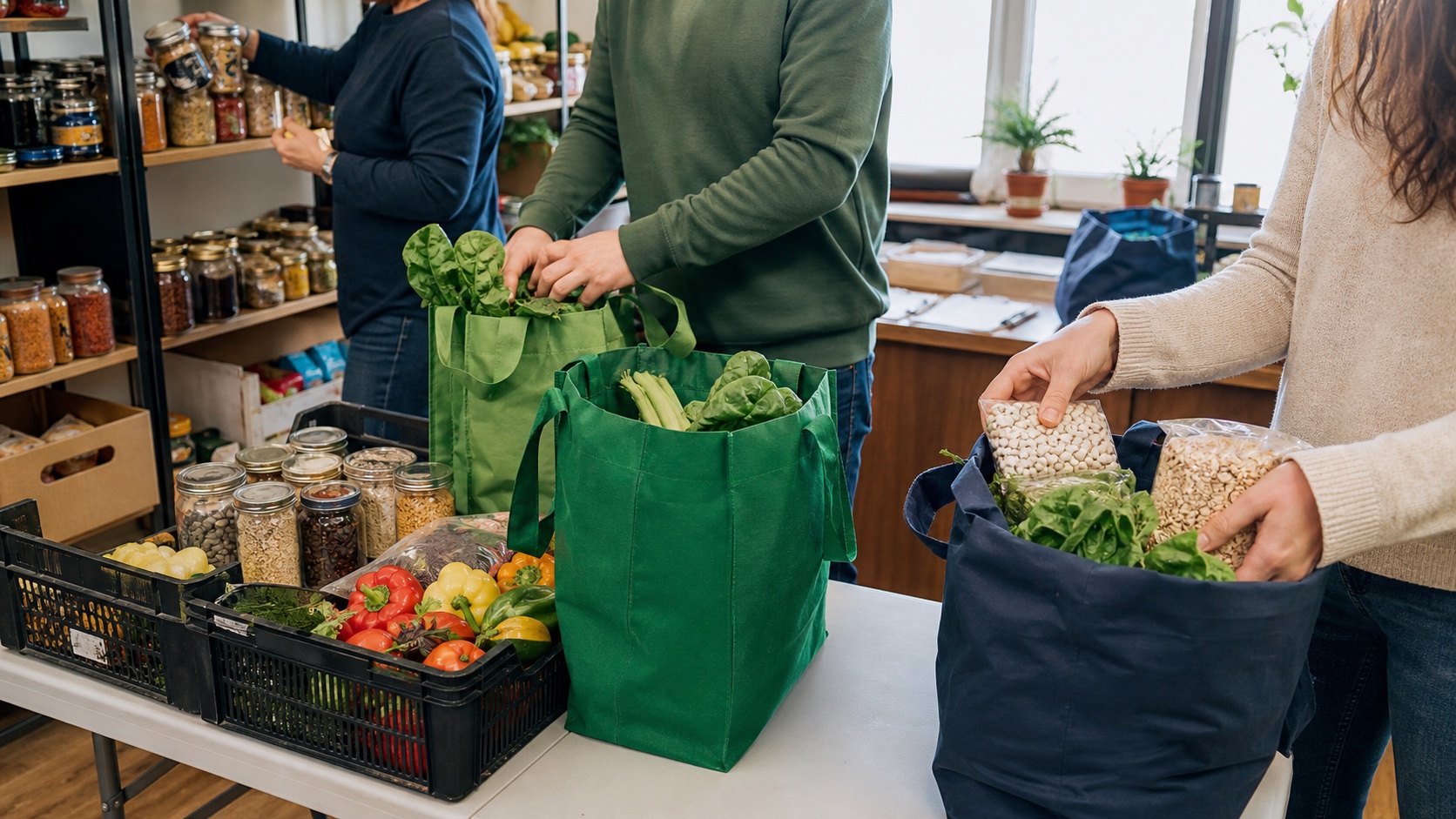
Useful food help begins with listening. A family may need groceries, but they may also need foods that match allergies, culture, cooking equipment, work schedules, and what their children will actually eat. A bag full of ingredients is not help if the recipient has no time, no pot, no working stove, or no idea how to turn those ingredients into meals. A better question is not, "What can I get rid of?" It is, "What would make this week easier?" That question changes the whole posture of giving.
Choice matters. Dignity matters. A pantry that lets people choose familiar staples is different from a box that assumes every household eats the same way. A meal train that asks about spice, texture, delivery time, and containers is different from one that drops off five pans of the same casserole. A neighborhood fridge with clear dates and clean shelves is different from a pile of leftovers no one wants to claim. The details are not small. They are the difference between charity that makes the giver feel generous and care that makes the receiver feel seen.
Families also need food support that fits the pace of real life. Some help should be immediate: dinner tonight, formula this afternoon, breakfast before school tomorrow. Some help should be steady: a monthly grocery circle, a shared list of reliable pantries, a freezer stocked before a surgery, a group text for extra garden produce, a ride plan for elders who no longer drive. The strongest systems do not wait for crisis. They make help ordinary enough that asking for it does not feel like a public confession.
A good community table has room for hunger, pride, fatigue, joy, and second helpings.
Children notice how adults handle food and need. They notice whether help is whispered about with shame or folded into everyday life. When a child sees a parent pack an extra lunch for a classmate, bring muffins to a grieving family, volunteer at a pantry, or say thank you without embarrassment when help comes back the other way, that child learns a practical form of citizenship. They learn that care is not only a feeling. It is a thing people schedule, carry, cook, wash, label, deliver, and repeat.
Food can also help neighbors cross the small distances that grow large over time. A potluck will not fix housing costs or medical debt, but it can introduce the retired nurse to the new parent, the gardener to the teacher, the student to the elder who knows the history of the block. Those relationships matter when the power goes out, when a family car breaks down, when school is closed, or when someone needs a ride to a clinic. Food is often the beginning of trust, and trust is what makes help move faster than a flyer or a website ever could.
Durham Feast will publish stories, practical guides, pantry-friendly meal ideas, interviews with local helpers, and notes on how families can support one another without making everything complicated. We will talk about what to keep on hand for flexible meals, how to organize a respectful meal train, how to welcome children into service without turning them into props, and how small groups can build habits that survive past one burst of enthusiasm. The aim is not perfection. The aim is a steadier table.
If this site does its job, it will make helping feel more possible. It will remind a tired parent that they are not failing because dinner is simple. It will give a neighbor one good way to show up. It will honor the people already doing this work quietly. It will treat food as both daily bread and daily practice, something humble enough to repeat and strong enough to hold a community together.